
Destination
Faroe Islands
Eighteen green islands stitched with sea cliffs and fog
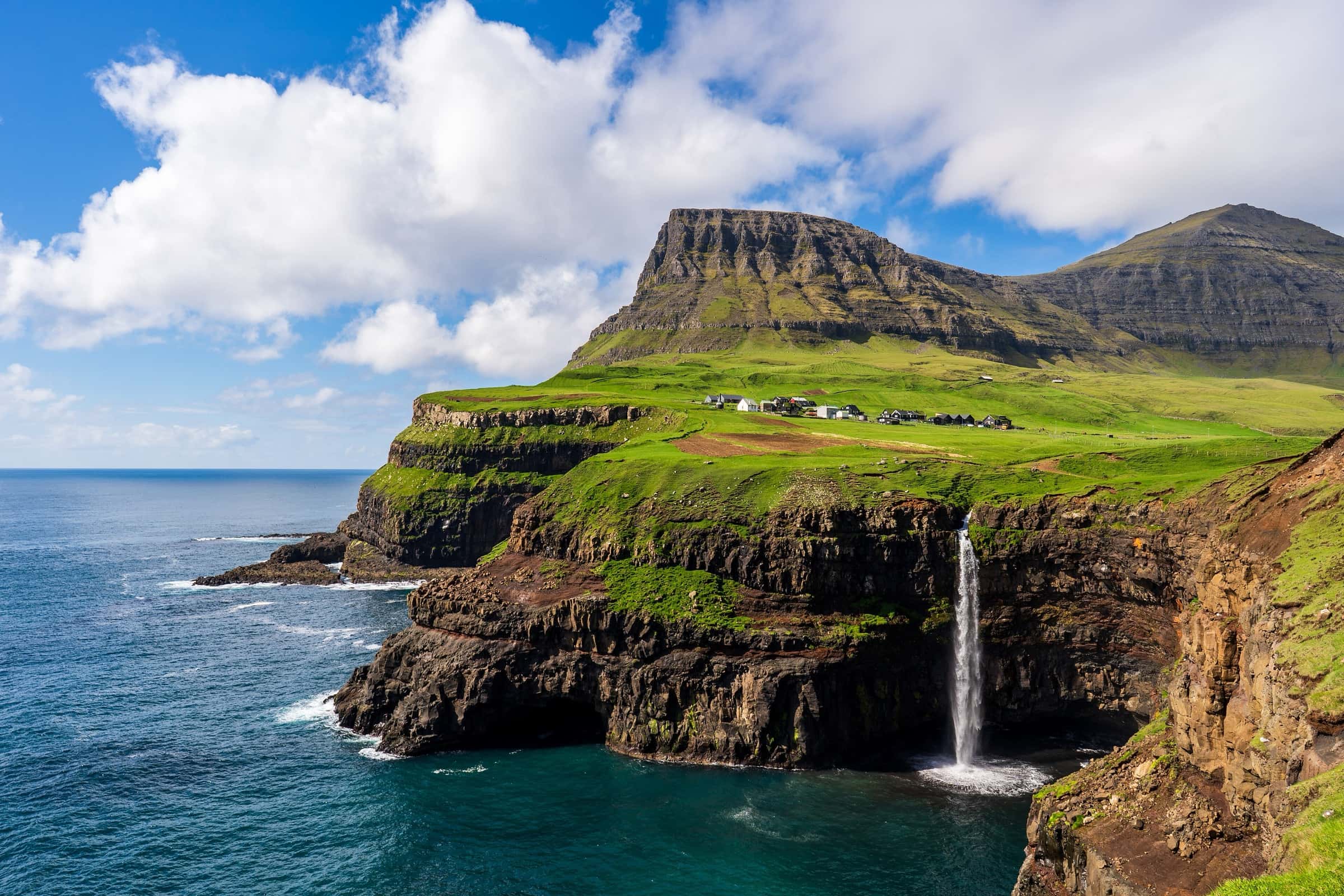
Between Iceland, Norway and Scotland, the Faroe Islands rise from the North Atlantic in walls of layered basalt. Grass-roofed villages sit in the folds of mountains. Sheep outnumber the people, and the weather rewrites the view by the hour.
The islands are compact and connected. Sub-sea tunnels, mountain roads and small ferries make it possible to reach a surprising amount in a few days, yet nothing here feels engineered for tourism. Faroese culture is quietly self-assured, with its own language, a strong food tradition, and a music scene far larger than the population suggests.
Tórshavn, one of the world's smallest capitals, keeps a working harbour, timber lanes and a growing table of serious restaurants built on lamb, seabird, and fish landed metres away.
Why travel here with Polaris
What we bring to Faroe Islands
The Faroes are our neighbours, a short flight from Iceland. They pair beautifully with an Icelandic journey, or stand alone for travellers who want the North Atlantic undiluted.
Distances look small here and drive times lie. Single-lane tunnels, ferry windows and fog all shape a good Faroese day, so we plan around them, and the days run easily.
What makes it distinctive
Worth crossing an ocean for
Vertical coastlines
Sea cliffs among Europe's highest, patrolled by fulmars and puffins in summer. Boat trips beneath them recalibrate your sense of scale.
Villages in the weather
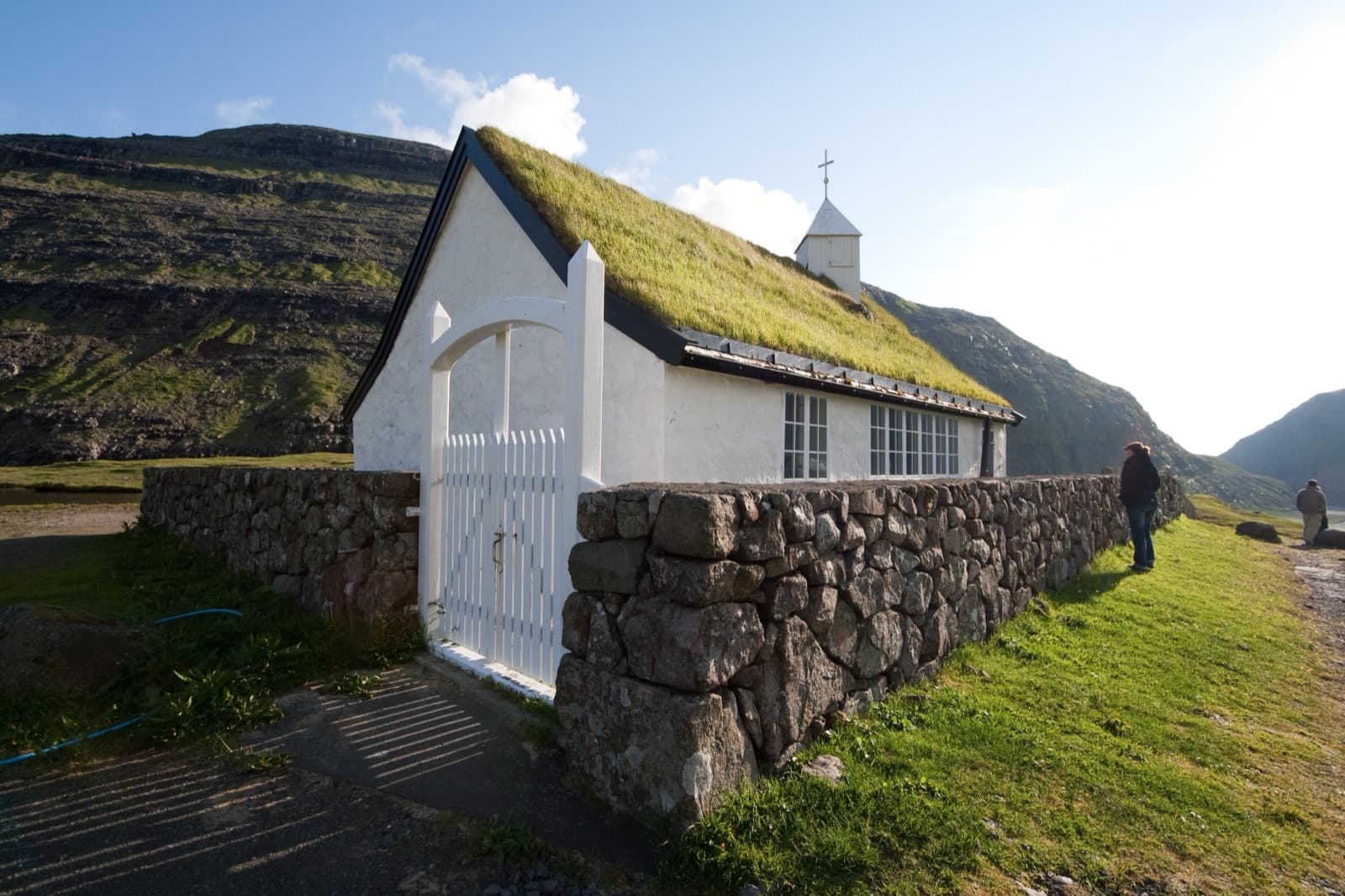
Turf roofs, tarred timber and churches by the tide line. Villages like Saksun and Gjógv feel grown out of the landscape rather than built on it.
A distinct food culture
Fermented lamb, just-landed fish and a new generation of Faroese chefs give the islands a table you will not find elsewhere.
When to travel
Reading the seasons
Long days, nesting seabirds and the green at full saturation. The most reliable window for hiking and boat trips.
Quieter trails and dramatic autumn seas. The weather demands flexibility and rewards it.
Low light, storms and near-empty islands, for travellers who love the North Atlantic in its winter voice.
Who it suits
Made for
- Walkers and photographers drawn to dramatic, moody landscapes
- Travellers adding a distinct chapter to an Iceland journey
- Those who prefer places still ahead of the crowd
A sample shape
Islands and tide lines
An illustrative shape, not a fixed itinerary. Every journey is designed around you.
Arrive Vágar; the lake that hangs above the ocean at Trælanípa, then over to Tórshavn's harbour lanes.
North through tunnels and switchbacks to Gjógv and the Eysturoy sea stacks.
Boat beneath the Vestmanna cliffs, afternoon in a village where the road ends.
A slow morning and a Faroese table before flying onward, often to Iceland.
Self-drive suits confident drivers; a local driver-guide unlocks more in fog and on single-lane roads. We shape the journey to your walking appetite and the season's ferry and flight rhythms.
Keep navigating
Follow the route onward
Continue by latitude, or carry the same way of travelling into a different landscape.
Begin your Faroe Islands journey with a conversation.
Tell us your dates, your party and what you hope for. We reply personally, and honestly.
Plan your journey